
Explore our versatile and robust laboratory-scale electrolysis cells, engineered for advanced R&D in water electrolysis (AEM, PEM, alkaline), CO₂ reduction, desalination, and other electrochemical applications. Our X-Cell and X-Stack product lines are designed for electrolysis R&D and offer unique modularity, flexibility, and customizability for testing diverse materials and configurations.
Need help finding the right setup? Contact us for tailored guidance.

Product Categories
Showing all 8 results
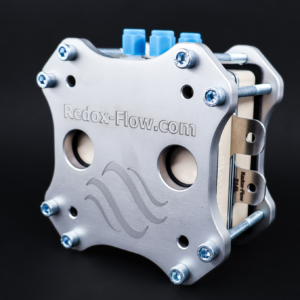
CDI Flow Cells, CO2 Electrolysis Cells, ...
From: 2,826.00 € Add to Quotation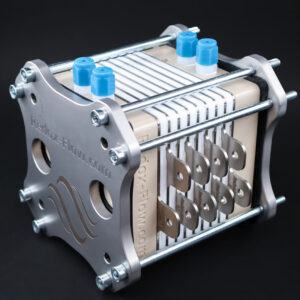 From: 3,395.00 €
Add to Quotation
From: 3,395.00 €
Add to Quotation

CDI Flow Cells, CO2 Electrolysis Cells, ...
From: 3,320.00 € Add to Quotation
From: 4,151.00 €
Add to Quotation
 From: 3,320.00 €
Add to Quotation
From: 3,320.00 €
Add to Quotation
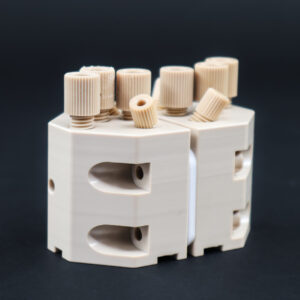
CDI Flow Cells, CO2 Electrolysis Cells, ...
From: 1,955.00 € Add to Quotation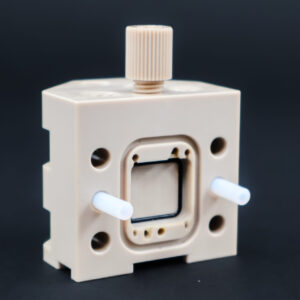
CDI Flow Cells, CO2 Electrolysis Cells, ...
From: 1,395.00 € Add to Quotation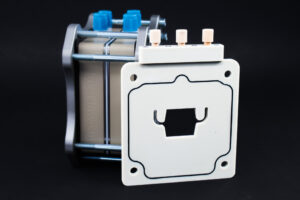
CDI Flow Cells, CO2 Electrolysis Accessories, ...
795.00 € Add to Quotation This product has multiple variants. The options may be chosen on the product pageElectrolysis is a cornerstone technology for a sustainable future, driving hydrogen production, CO₂ reduction, and many other electrochemical conversions. Our laboratory-scale electrolysis cells are designed to give researchers the flexibility and reliability they need to advance the field — from catalyst screening through stack-level scale-up.
Water electrolysis separates water into hydrogen and oxygen — a cornerstone of green hydrogen research. Our cells support the three dominant water electrolysis chemistries (alkaline, AEM, and PEM) on the same hardware, with quick chemistry-to-chemistry swaps via gasket, membrane, and electrode changes.
Our cells support research across all three low-temperature water electrolysis routes:
The same underlying X-Cell platform handles all three chemistries — just swap membranes, electrodes, and gaskets to reconfigure.
Our cell design philosophy is centered on modularity. Whether you’re screening catalysts for the Oxygen Evolution Reaction (OER), developing novel anion exchange membranes, or building a multi-compartment electrolysis cell for CO₂ reduction or electrodialysis, our platforms can be configured to match your experiment. Electrodes, current collectors, bipolar plates, membranes, and flow fields are all interchangeable components.
The same underlying X-Cell platform supports alkaline, AEM, and PEM water electrolysis, CO₂ reduction, and electrodialysis. Active areas of 2.5 × 2.5 cm and 5 × 5 cm are interchangeable by gasket swap. Current collectors available in Ni, Ti, 316L stainless steel, Cu, Pt-coated Ti, Au-coated, and Ti; flat and interdigitated flow-field geometries available.
For experiments that need more than a standard two-compartment electrochemical cell, our X-Cell with 3 or 4 compartments enables middle-chamber chemistries — useful for CO₂ reduction, alkaline fuel cell research, and electrodialysis setups. A single platform converts between two-, three-, and four-compartment configurations by swapping gasket sets.
Our X-Cell with reference electrode ports adds four Luggin-capillary ports (two on-membrane, two at the electrode inlet) supporting up to three reference electrodes to the standard flow body. Unlike most commercially available cells, our reference electrode setup is usable at elevated temperature — up to 95 °C — enabling half-cell potential measurements under realistic operating conditions. This is particularly valuable for catalyst characterization, overpotential studies, and detailed kinetic analysis.
Compact 1 cm² research cell with ten configurations covering closed, open, half-cell, and three-compartment modes. Ideal for catalyst screening, membrane evaluation, and proof-of-concept work where small material quantities and fast turnaround matter.
When your research moves beyond single cells, our electrolyzer stack platform (X-Stack) supports up to 9 cells in series for stack characterization, bipolar-plate screening, and scale-up studies. Two variants cover different electrode regimes:
Both variants support individual cell voltage measurement on the bipolar plates, so you can characterize each cell in the stack independently.
While hydrogen production is the most prominent application, our electrolysis cells and research-grade electrolyzers are used across the electrochemical landscape: CO₂ electrolyzer setups for CO₂ reduction, desalination and ion removal, electrosynthesis, organic electrochemistry, and electrochemical metal recovery. The same X-Cell that runs PEM water electrolysis today can run a CO₂RR experiment tomorrow. Other supported chemistries include:
Our electrolysis cells support PEM, AEM, and alkaline water electrolysis on the same underlying platform. You change chemistry by swapping membranes, electrodes, and gaskets — no new hardware needed. The same cells also support CO₂ electrolysis, electrodialysis, flow battery research, and other electrochemical flow experiments.
The X-Cell is a single-cell platform for catalyst, membrane, and electrode research at the fundamental level. The X-Stack supports up to 9 cells in series, making it suitable for stack characterization, bipolar-plate screening, and scale-up studies. Most labs start with X-Cell for materials development and move to X-Stack when they’re ready to evaluate stack-level behavior.
Yes. The platform is built around interchangeable components, so you can integrate custom MEAs, custom GDLs, commercial membranes, or research-grade materials directly into the cell. Standard active-area options (2.5 × 2.5 cm and 5 × 5 cm) are designed to accept a wide range of third-party components.
Yes — the X-Cell with reference electrode ports adds four Luggin capillary ports that work up to 95 °C, which is higher than most commercial reference-electrode cells on the market. This enables realistic half-cell potential measurements under operating conditions rather than at room temperature only.
X-Cell variants are rated to app. 90 °C.
Standard options include Ni, Ti, stainless steel, Cu, Pt-coated Ti, and Au-coated Ti. Flat or interdigitated flow-field geometries are available depending on the cell variant.
Custom materials can be discussed for specific research needs.
|
Feature |
Benefit |
|
Modular Design |
Easily swap electrodes, membranes, and flow fields. |
|
Material Compatibility |
Test a wide range of materials for current collectors and bipolar plates. |
|
Multi-Compartment Options |
Build advanced cell architectures for complex electrochemical processes. |
|
Reference Electrode Ports |
Enable precise half-cell potential measurements for detailed analysis. |
For assistance in selecting the ideal electrolyzer configuration for your project, please contact our technical team.