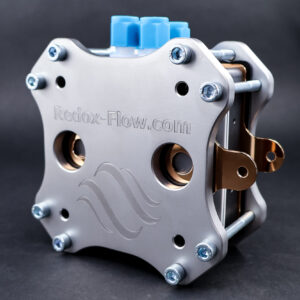
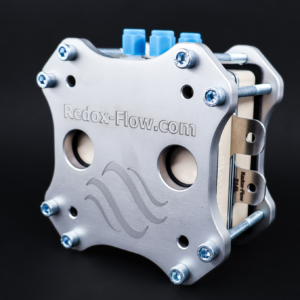
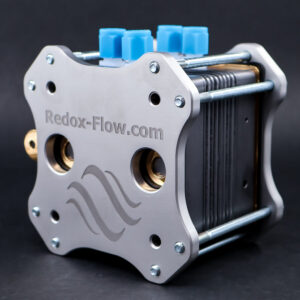
M-Cell: the ultimate multipurpose research cell
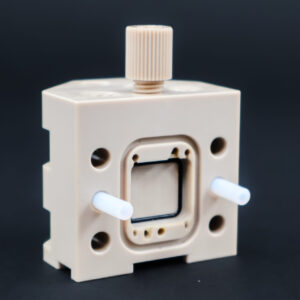
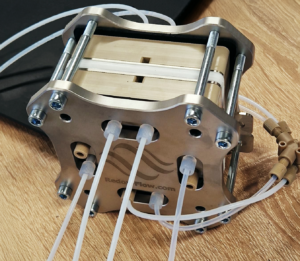
The M-Cell is a versatile and precise 1 cm² research cell developed to address a core need in modern electrochemical laboratories: a single, reliable platform that can be adapted to a range of research projects. Whether the application is fundamental electrochemical investigation or applied engineering, the M-Cell can be configured accordingly.
Unparalleled versatility in a compact design
The M-Cell’s modularity is central to its flexibility. By changing the gasket configuration and current collectors, entirely different electrochemical setups can be built on the same cell hardware. Typical applications include:
- Catalyst and material screening: the small 1 cm² active area is well-suited for testing precious metal catalysts (e.g. Pt, Ir, Ru), novel gas diffusion electrodes (GDEs), and newly synthesised membrane materials where sample quantity is limited or material cost is high.
- Flow battery research: operate in a standard closed-cell configuration (Configurations A to C) to test electrode felts, membranes, and electrolyte formulations for redox flow batteries.
- Water electrolysis: configure as a closed cell with membrane (for PEM, AEM, or alkaline electrolysis) or as an open cell without membrane (for membraneless electrolysis studies). Reference electrodes can be added to deconvolute anode and cathode overpotentials.
- CO₂ reduction (CO₂RR): use the closed cell, open cell, or three-compartment configuration (Configuration I) to investigate electrochemical CO₂ conversion with control over the cathode environment.
- Electrodialysis: the three-compartment configuration (Configuration I) enables studies with two membranes and a central compartment, suited for ion separation research.
- Fundamental electrochemistry and cyclic voltammetry: the Full Cell hardware can also be used in half-cell configurations (G-1, G-2) for classic three-electrode experiments, providing a robust and reproducible alternative to traditional beaker cells.
- Corrosion studies: the half-cell setup with a precise reference electrode provides a platform for corrosion testing in flowing electrolytes.
Advanced reference electrode system
A defining feature of the M-Cell is its precise reference electrode capability. The design incorporates multiple Luggin capillary based arrangements that guide the measurement point to defined locations inside the cell with a spatial precision better than approximately 0.2 mm, while the reference electrode itself remains outside the primary electrochemical environment. This enables:
- Accurate overpotential measurement: deconvolute anode and cathode overpotentials in full-cell operation.
- Reduced uncompensated resistance: Luggin capillary placement lowers IR-drop for more accurate kinetic data.
- Localised potential sensing: place the reference point at the electrode surface, between the electrodes, or through the membrane (Configuration C) to investigate local electrochemical phenomena.
- Flexible positioning: Configuration H allows a 1/16” OD tube to be used as a Luggin capillary directed to almost any point in the cell.
The reference electrode circuit can be operated in dead-end mode (using a syringe, eliminating shunt currents) or in pump mode (preventing gas bubble accumulation). For detailed guidance, see the assembly manual.
Multiple operation modes
The M-Cell can be assembled into a number of distinct configurations, each tailored for specific applications. The three fundamental operation modes are:
- closed cell operation (Configurations A, B, C): the standard two-compartment flow cell setup with electrodes separated by a membrane or porous separator. Electrolyte is circulated through each half-cell independently. Applicable to flow batteries, membrane-based electrolysis, and CO₂ reduction.
- open cell operation (Configurations D, E, F): a membraneless configuration where the cell is immersed in a common electrolyte reservoir. Electrolyte is pumped through the cell and exits between the electrodes. Applicable to membraneless water electrolysis and fundamental electrode studies.
- half-cell operation (Configurations G-1, G-2): a three-electrode setup. The electrode in the M-Cell serves as the working electrode, while the counter electrode is placed externally (G-1, wire counter) or in a second flow body (G-2). Key features include:
- reference electrode measurement point with spatial precision better than approximately 0.2 mm
- fixed geometry ensures the working, counter, and reference electrodes are always in the same spatial relationship, supporting reproducible measurements
- flow can be created through the working electrode, enabling studies of electrochemical kinetics under controlled mass transport, with characteristics comparable to a rotating disk electrode (RDE) and applicability to porous electrode materials
Additionally, Configuration I (three-compartment operation) enables setups with two membranes and a central compartment, suited for CO₂ reduction with separate anolyte/catholyte/central streams and for electrodialysis research.
| Configuration |
Operation mode |
Reference electrodes |
Key applications |
| A |
Closed cell |
None |
Flow batteries, electrolysis, CO₂ reduction |
| B |
Closed cell |
Individual anode and cathode |
Electrolysis, CO₂ reduction, flow batteries |
| C |
Closed cell |
On membrane |
Electrolysis, CO₂ reduction |
| D |
Open cell |
None |
Membraneless electrolysis, CO₂ reduction |
| E |
Open cell |
Individual anode and cathode |
Electrolysis, CO₂ reduction |
| F |
Open cell |
Common (via T-connector) |
Electrolysis, CO₂ reduction |
| G-1 |
Half-cell (wire counter) |
Yes |
Cyclic voltammetry, catalyst screening, kinetic studies |
| G-2 |
Half-cell (flow body counter) |
Yes |
Cyclic voltammetry, catalyst screening, kinetic studies |
| H |
Flexible Luggin |
Flexible positioning |
Any application requiring custom reference placement |
| I |
Three-compartment |
Yes (through membrane) |
CO₂ reduction, electrodialysis |
System integration
The M-Cell was co-developed with the Multiport Electrolyte Reservoir to form a complete experimental platform. Together they enable:
- sealed, oxygen-free, or CO₂-saturated electrolyte environments
- temperature control up to at least 95 °C
- flexible electrolyte sampling and management
The M-Cell is also compatible with the broader range of Redox-Flow research tools, including the Temperature Control Unit and the Flow-Through Electrode Holder for inline monitoring of pH, ORP, reference potential, and conductivity.
Electrical connections
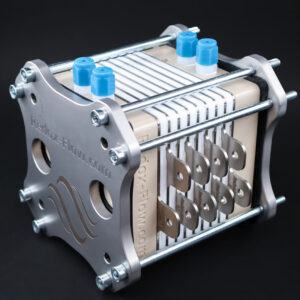
The M-Cell uses a 4-wire configuration (I+, U+, I−, U−) with ø0.7 mm wires in titanium, nickel, or 316L stainless steel. Wire quick connectors are included for fast and robust connections to a potentiostat or power supply.
Gaskets and electrode thickness
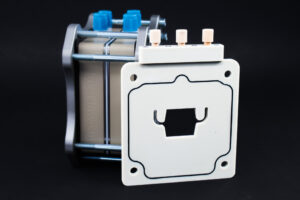
Due to the many possible configurations, the M-Cell is supplied without gaskets. Gaskets are ordered separately to match the specific application. The gasket type and thickness define the electrode compression, the presence of reference electrode channels, and the overall cell configuration. See the assembly manual for detailed guidance on gasket selection for each configuration.



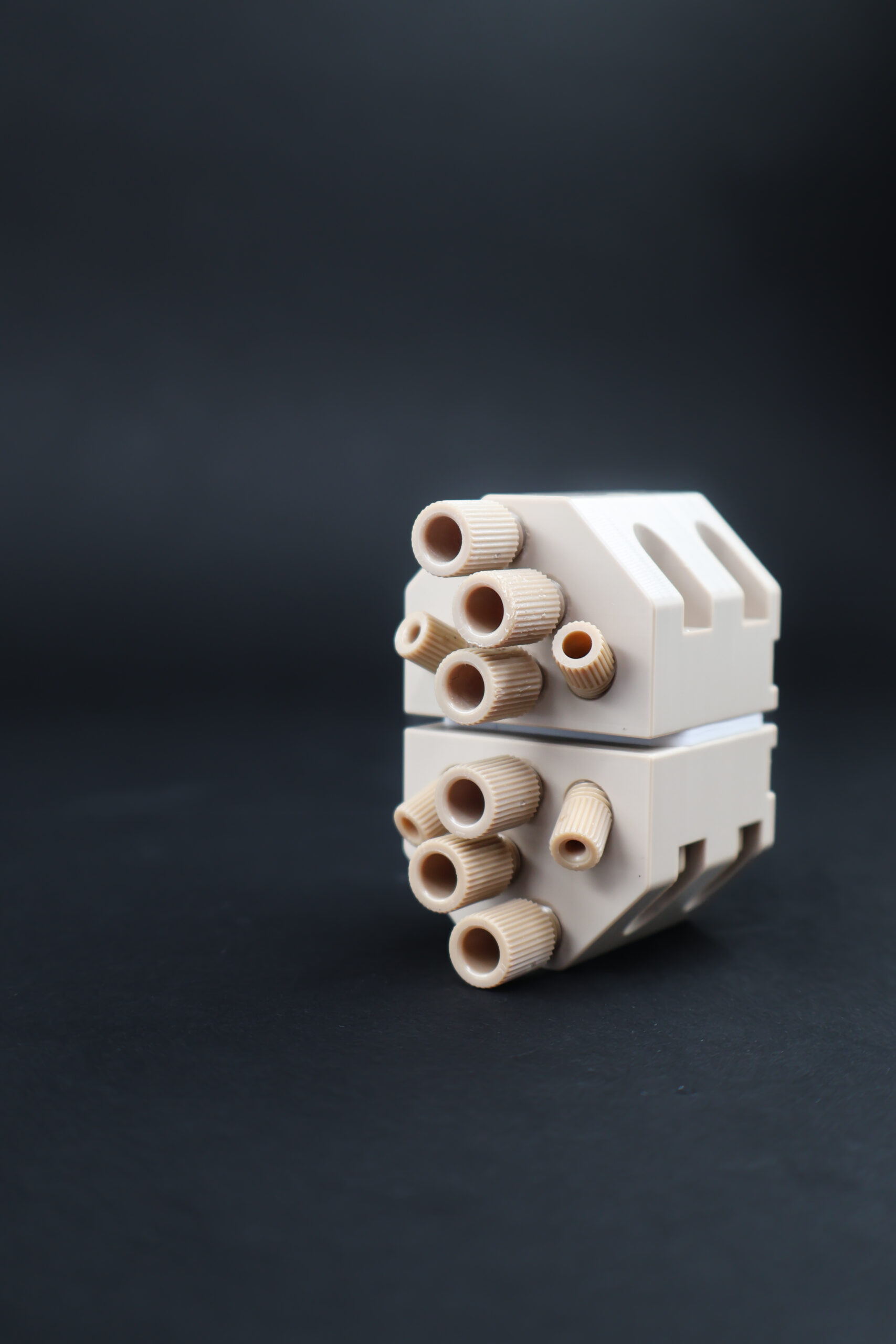


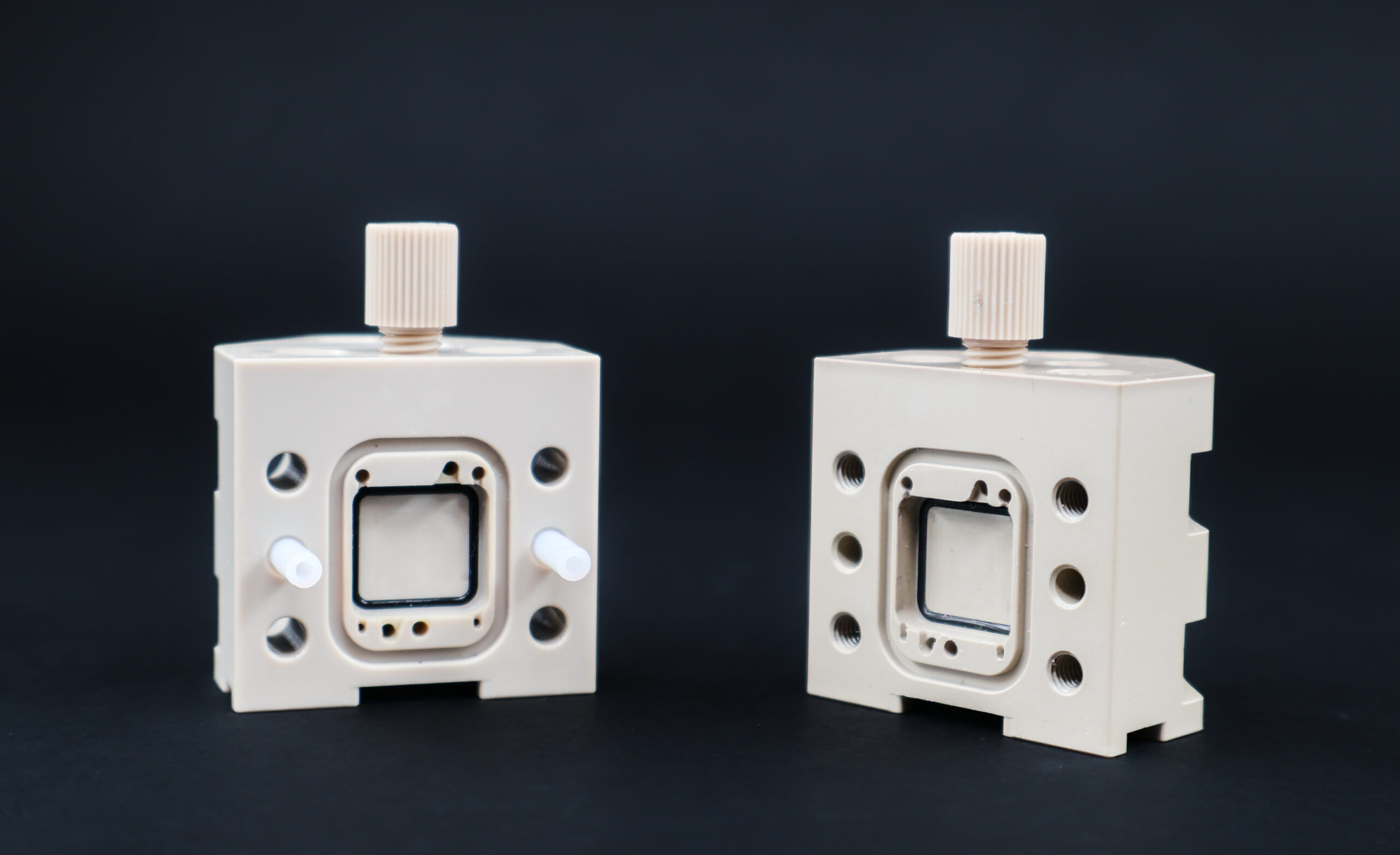


 From: 5,545.00 €
 From: 4,151.00 €

 From: 3,320.00 €
 From: 3,410.00 €