
Our selection of high-performance electrodes for electrolysis applications. We supply a variety of porous and 3D-structured electrodes — including metal felts, nickel foam, and carbon felts — designed to maximize active surface area and optimize mass transport in your electrochemical flow cells.
Need help finding the right setup? Contact us for tailored guidance.
Product Categories
Showing all 3 results
Consumables, Electrodes, ...
135.00 € – 165.00 €Price range: 135.00 € through 165.00 € Add to Quotation This product has multiple variants. The options may be chosen on the product page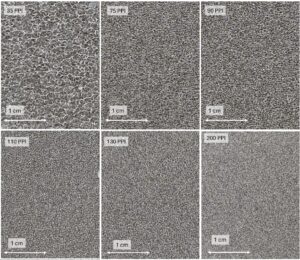
Consumables, Electrodes, ...
90.00 € – 135.00 €Price range: 90.00 € through 135.00 € Add to Quotation This product has multiple variants. The options may be chosen on the product page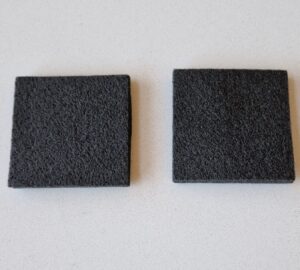
Consumables, Electrodes, ...
25.00 € – 300.00 €Price range: 25.00 € through 300.00 € Add to Quotation This product has multiple variants. The options may be chosen on the product pageThe performance of any electrolysis system depends heavily on the structure and material of the electrodes. For research and development in water splitting, CO₂ reduction, and other electrochemical conversions, maximizing the active surface area while maintaining excellent mass transport is critical. We provide a curated selection of 3D-structured electrodes designed specifically for integration into our modular flow cells.
Whether you are developing novel electrocatalysts or optimizing system-level efficiency, our electrodes provide a robust, highly conductive substrate. They are particularly well-suited for alkaline and Anion Exchange Membrane (AEM) water electrolysis, where high-surface-area nickel and carbon materials are standard.
Highly porous, 3D-structured nickel substrates with excellent electrical conductivity and alkaline corrosion resistance. Ideal as a support for OER and HER catalysts in alkaline and AEM water electrolysis.
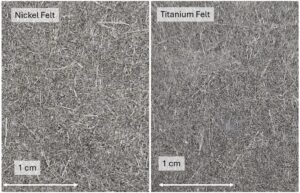
Sintered metal fiber felts with high specific surface area and strong mechanical stability. Used when a robust, highly conductive porous transport layer (PTL) is required — including zero-gap and liquid-fed electrolysis architectures.
Premium carbon and graphite felts offering high chemical resistance and tunable compression. Widely used in various electrochemical applications including flow batteries and non-aqueous electrolysis, and setups where metal-free substrates are preferred.
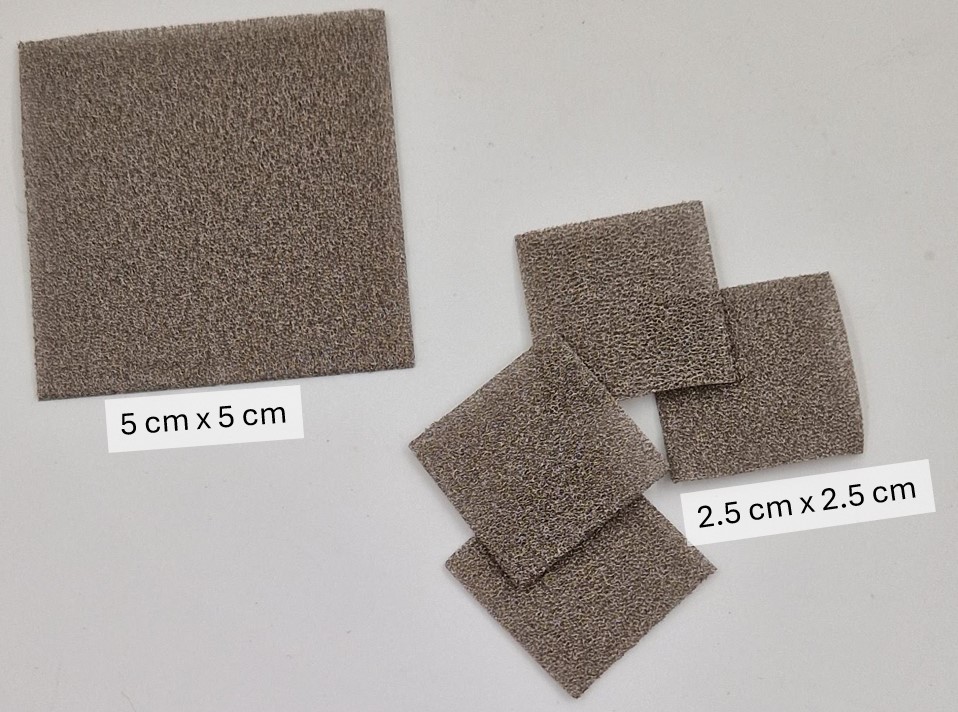
Our electrodes can be cut to fit the 2.5 × 2.5 cm and 5 × 5 cm active areas of the X-Cell and X-Stack platforms, and we can accommodate custom requests. We also supply cutting tools for electrodes – to be used with our electrode 20 cm x 30 cm sheet sizes, as well with third-part electrodes.
Nickel foam is the most common choice for alkaline and AEM water electrolysis — it’s conductive, corrosion-resistant in alkaline media, and serves as a good catalyst support. Metal felts are an alternative when you need a porous transport layer with higher mechanical strength.
Nickel foam has an open-cell reticulated structure that maximizes electrolyte penetration and surface area, making it the go-to for catalyst-supported water electrolysis. Metal felts are denser, sintered fiber structures with higher mechanical strength — preferred when compression stability and conductivity across the thickness are priorities.
Yes. Carbon felts and certain metal felts are widely used as substrates for CO₂ reduction electrocatalysts. Material choice depends on your catalyst chemistry and electrolyte — contact us for application-specific guidance.
Yes. Send us your required dimensions and we’ll quote custom cutting for both the X-Cell (2.5 × 2.5 cm) and S-Cell (5 × 5 cm) footprints, as well as bespoke geometries.
Standard cuts match our X-Cell (2.5 × 2.5 cm) and S-Cell (5 × 5 cm) active areas. Custom sizes are available on request for third-party cells and custom stack designs.