
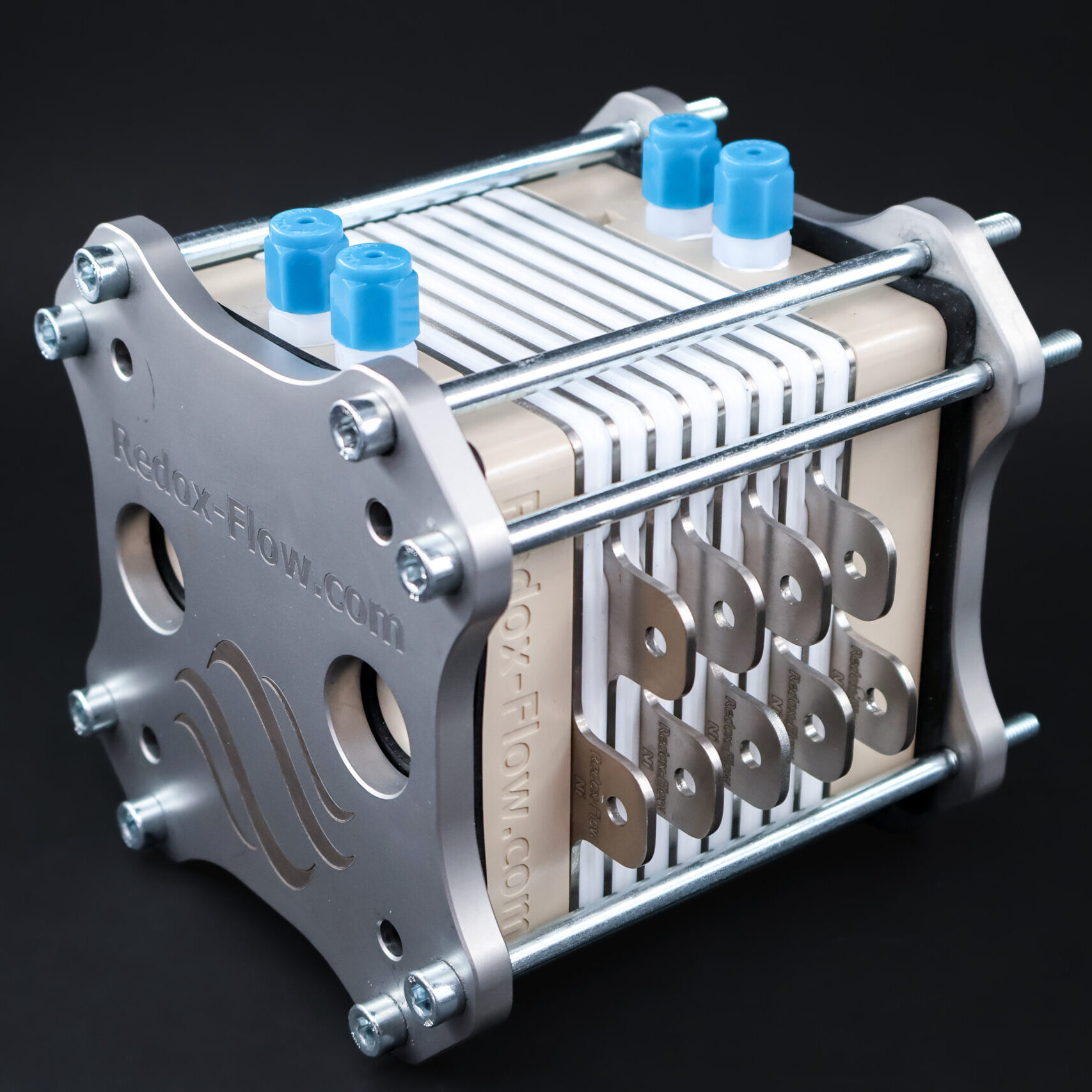
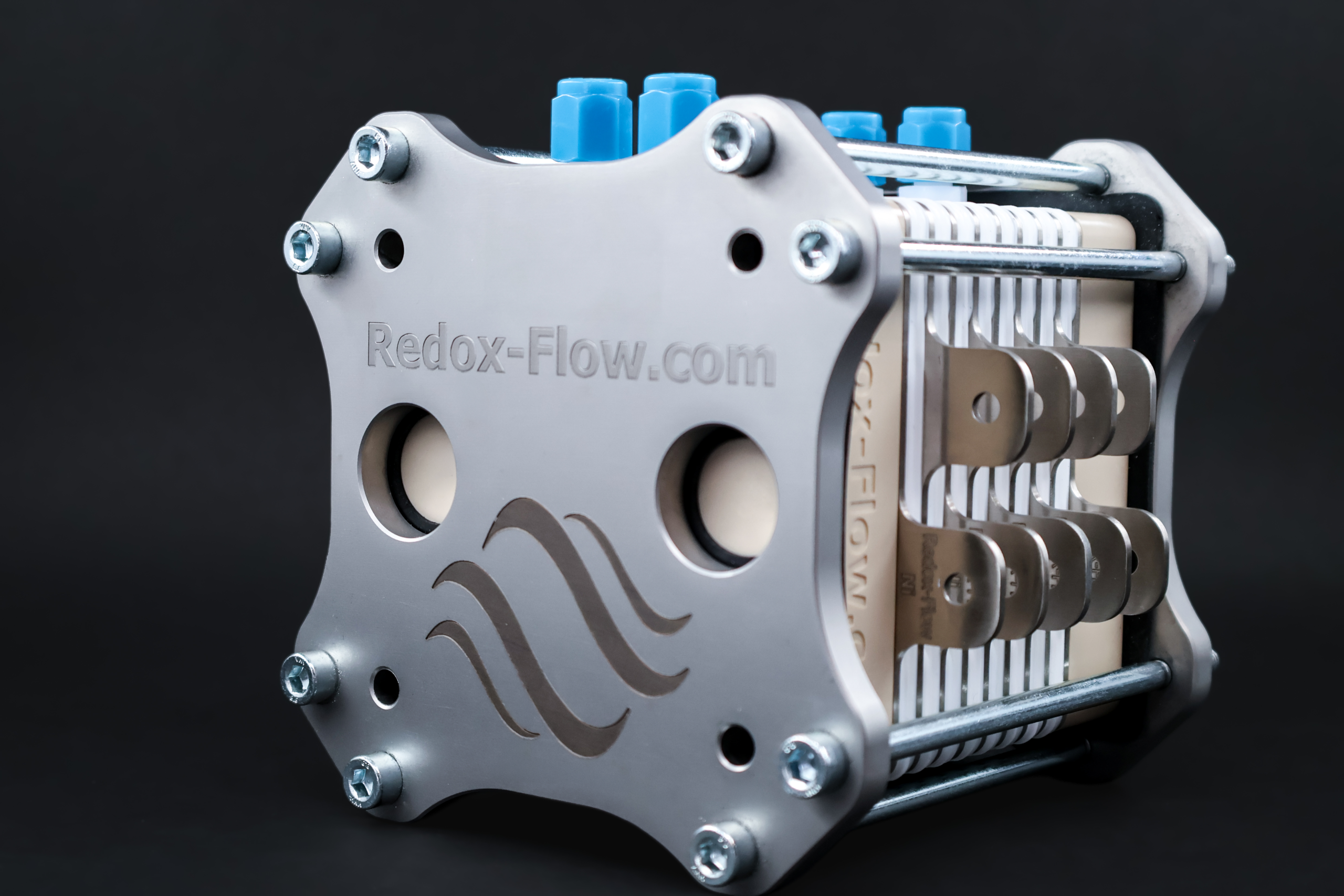
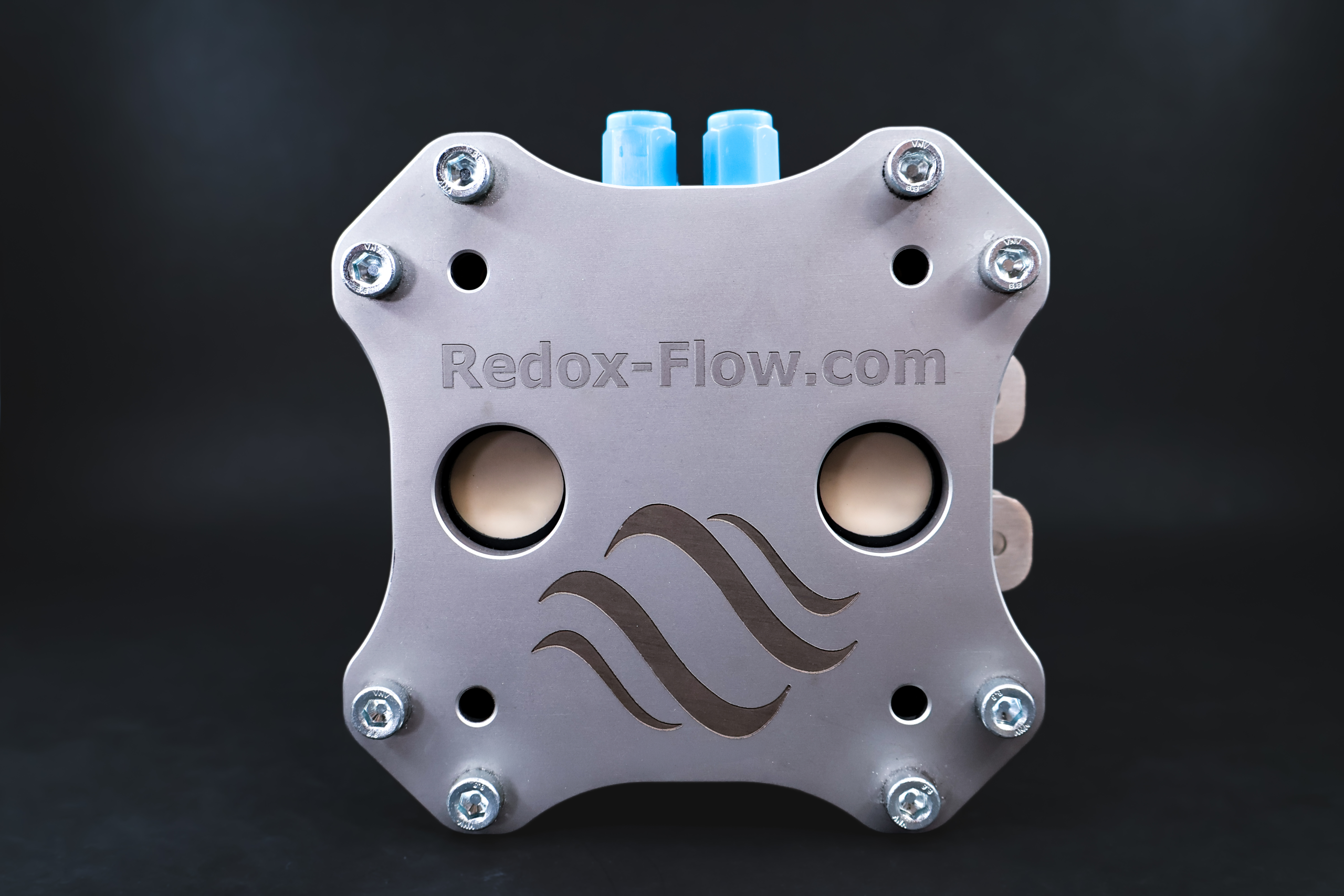
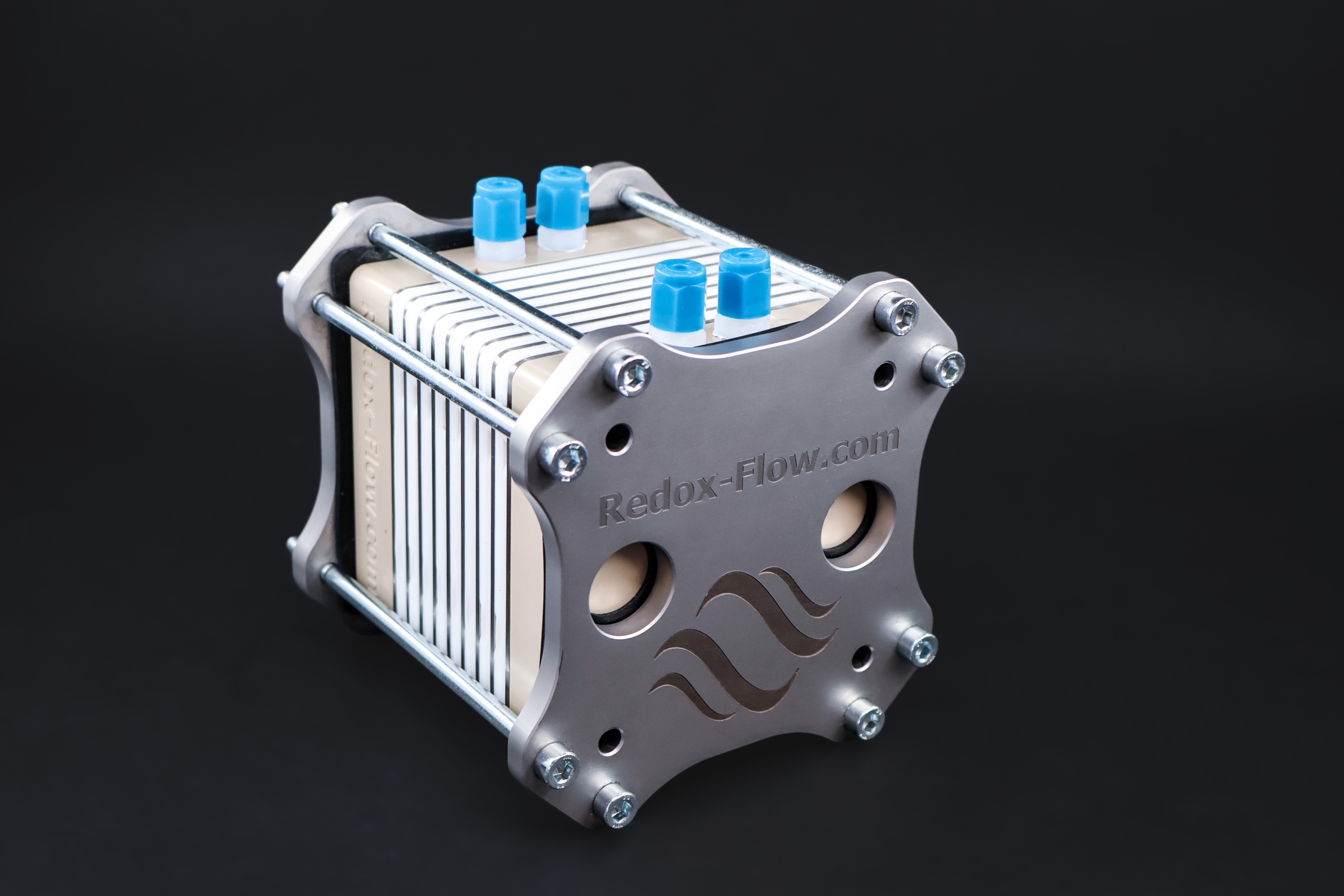
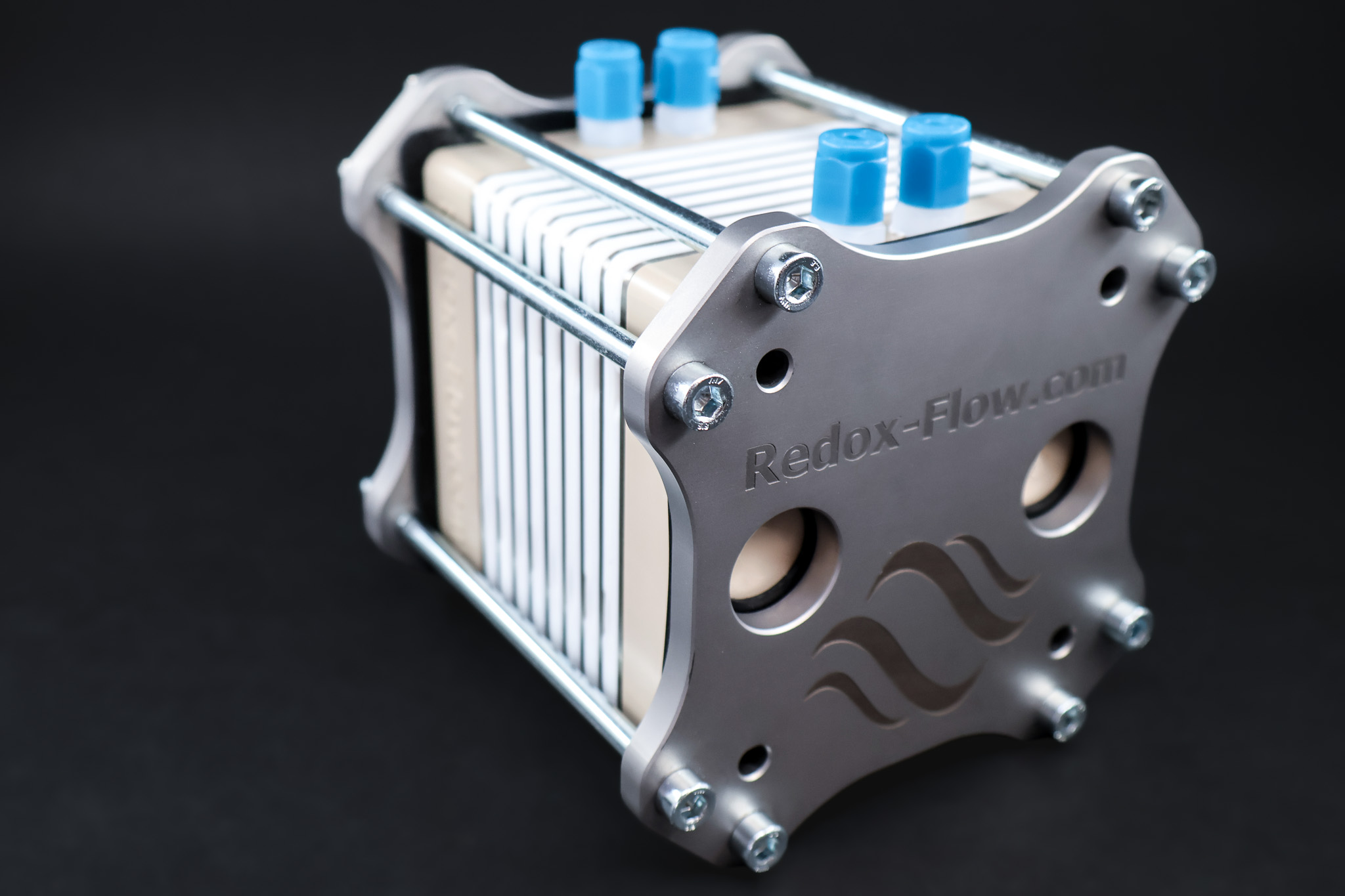
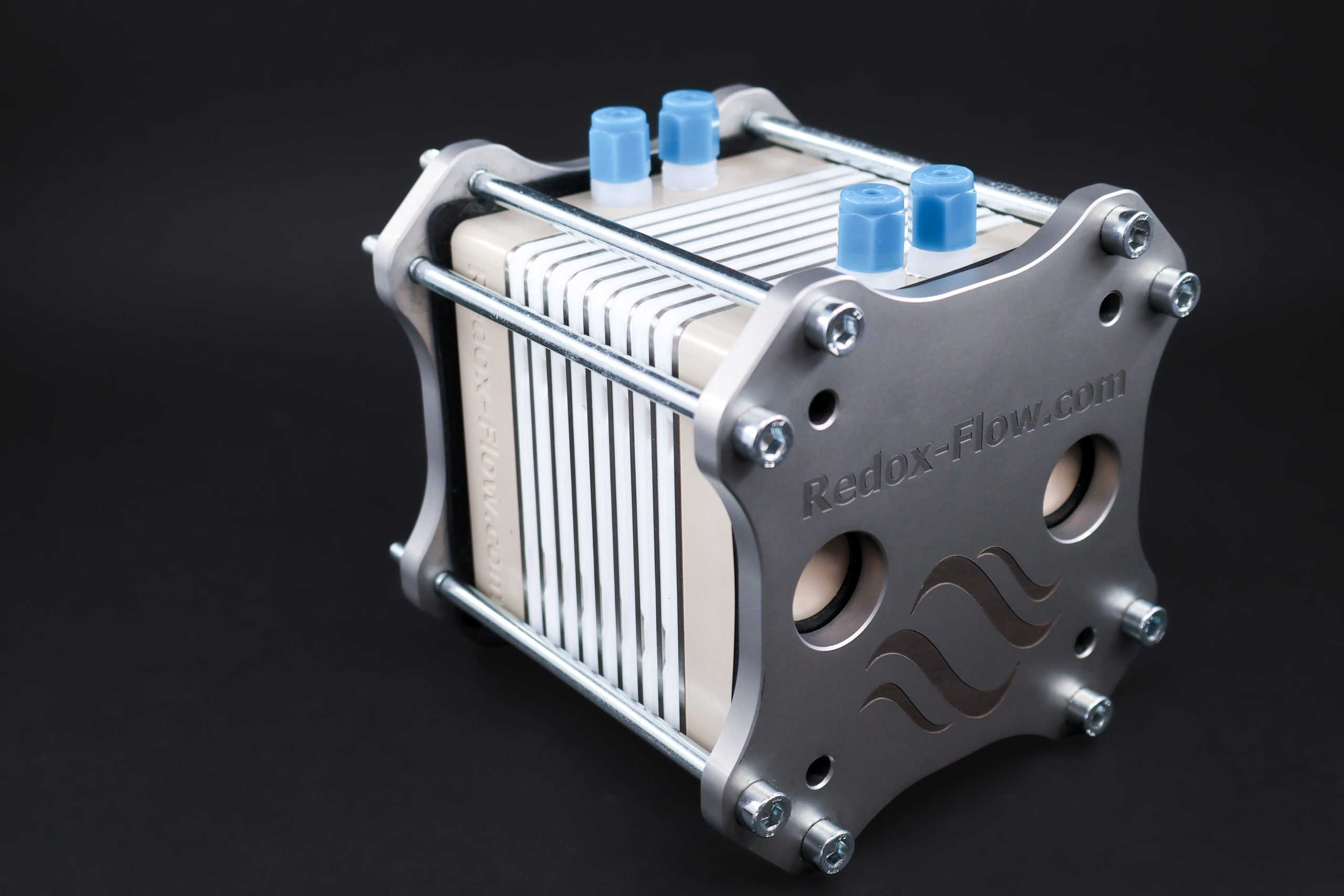
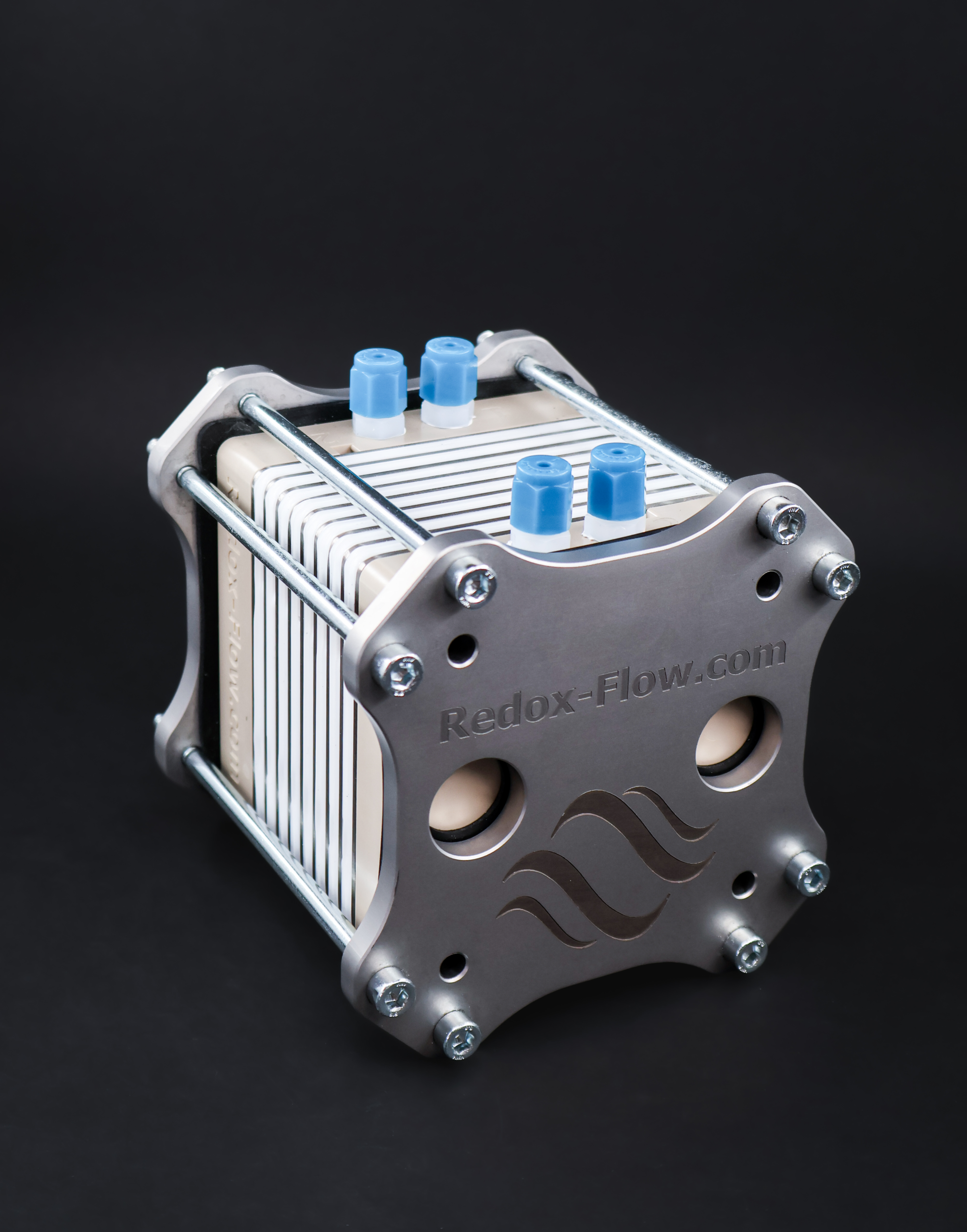




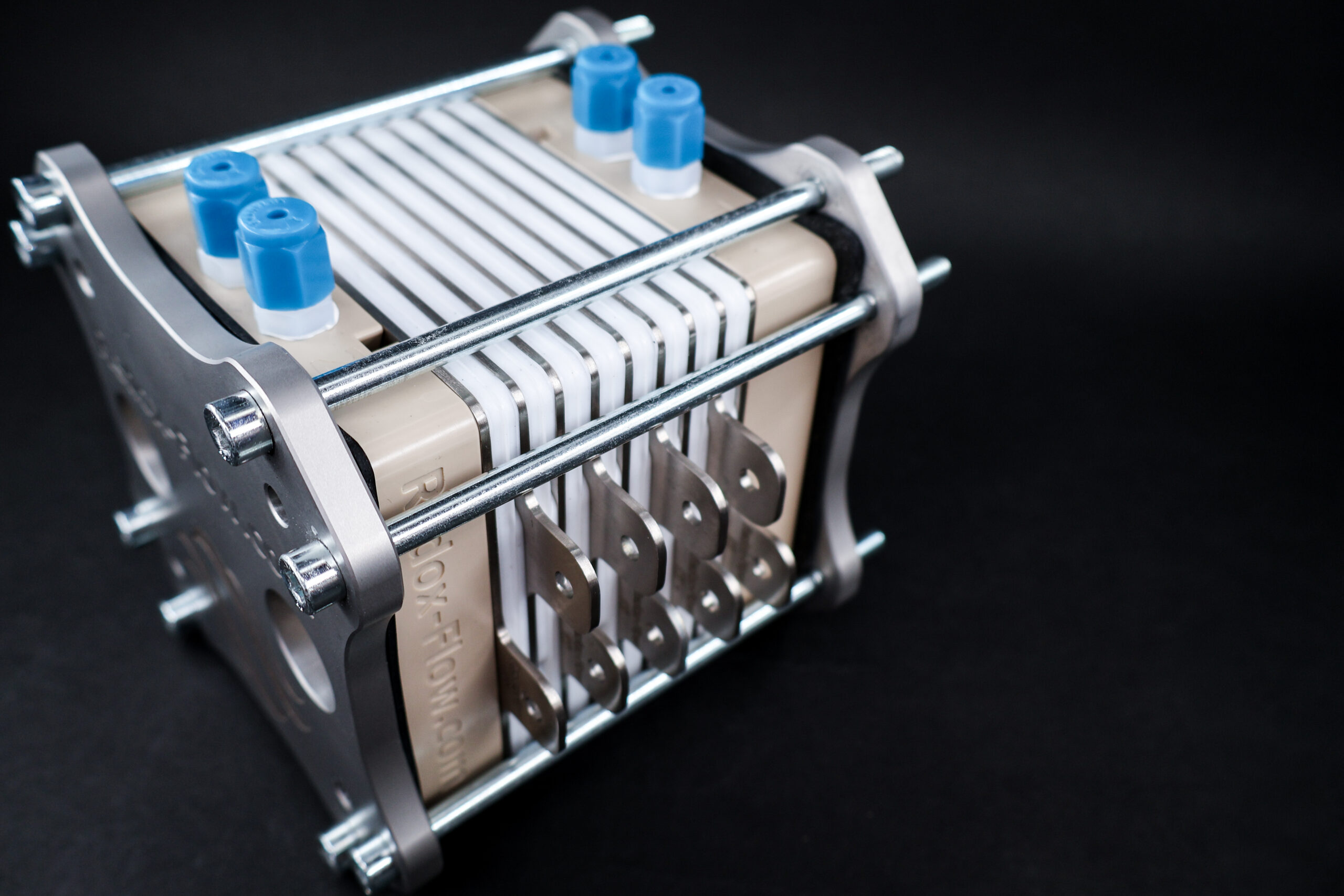
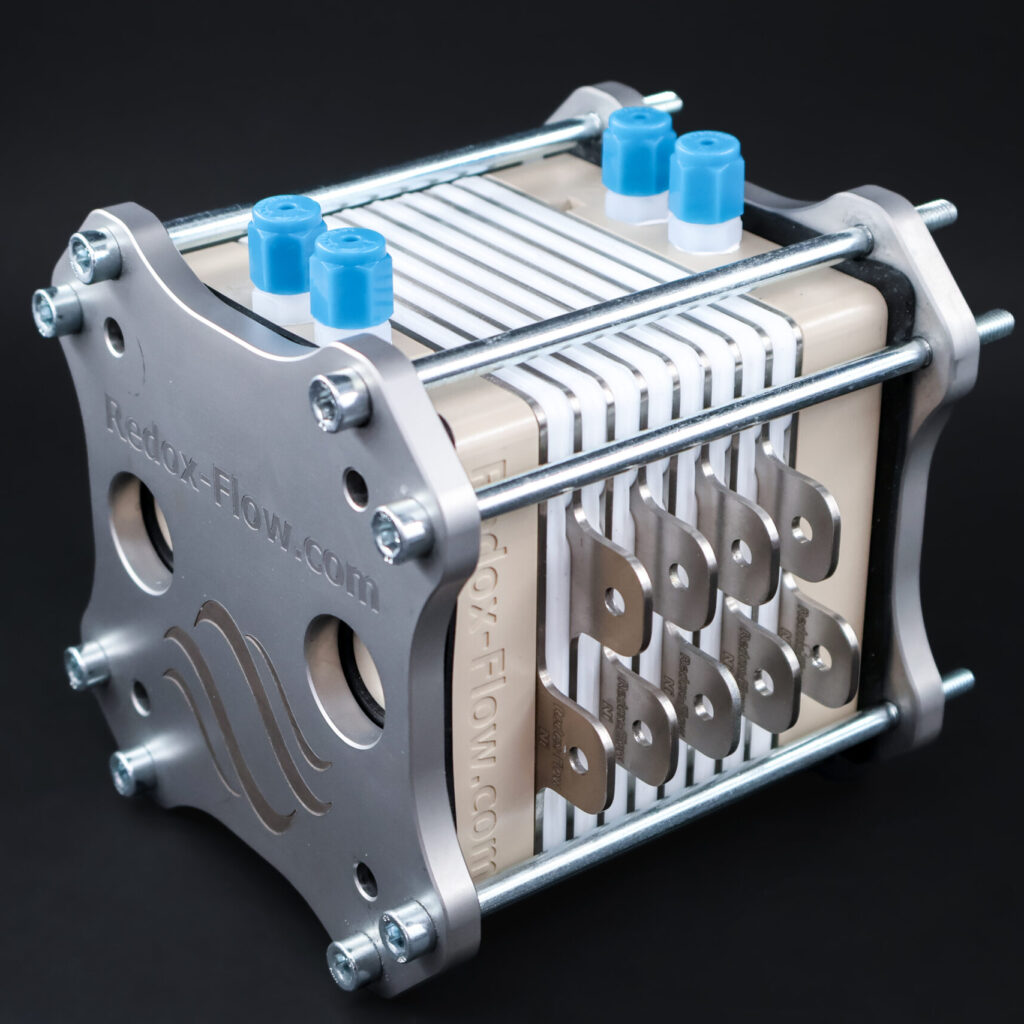
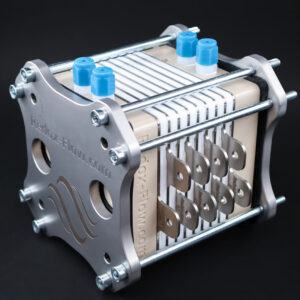
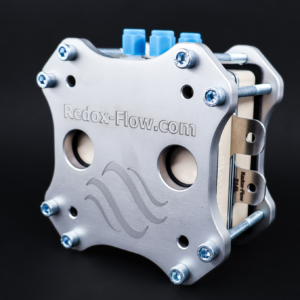
The X-stack FF is an R&D stack similar to the X-stack Flat, the only difference is that X-stack FF comes with bipolar plates that have interdigitated flow fields which allows testing of very thin electrodes (for the X-stack Flat we recommend not to use electrodes thinner than approximately 1 mm). It was developed for testing/optimisation of components (electrode/membranes/bipolar plates), testing of stack properties, upscaling and demonstration. It can be tested with cells up to nine cells.
The overall design criteria for the X-stack FF are the following
Due to the many material choices and flexibility, the X-stack FF can be used for many different applications, that includes AWE , AEM electrolysis, PEM electrolysis, CO2 electrolysis, but possibly also other electrochemical prosses.
Some of the unique features of the X-Stack FF are
The electrolyte is only in contact with flow body (PEEK), gaskets (PTFE, Viton or EPDM), O-ring (Viton/EPDM), metal bipolar plate, electrode and membrane. The X-cell is intended for general electrolyzers purposes ranging from acidic to alkaline environment.
Configuration of the Stack and gaskets
The central component of the X-stack FF is the bipolar plate (shown in picture below), that has flow fields on both sides. Unlike any other Redox-flow.com cells with interdigitated flow fields, the flow field is elevated 1.2 mm on the bipolar plate.
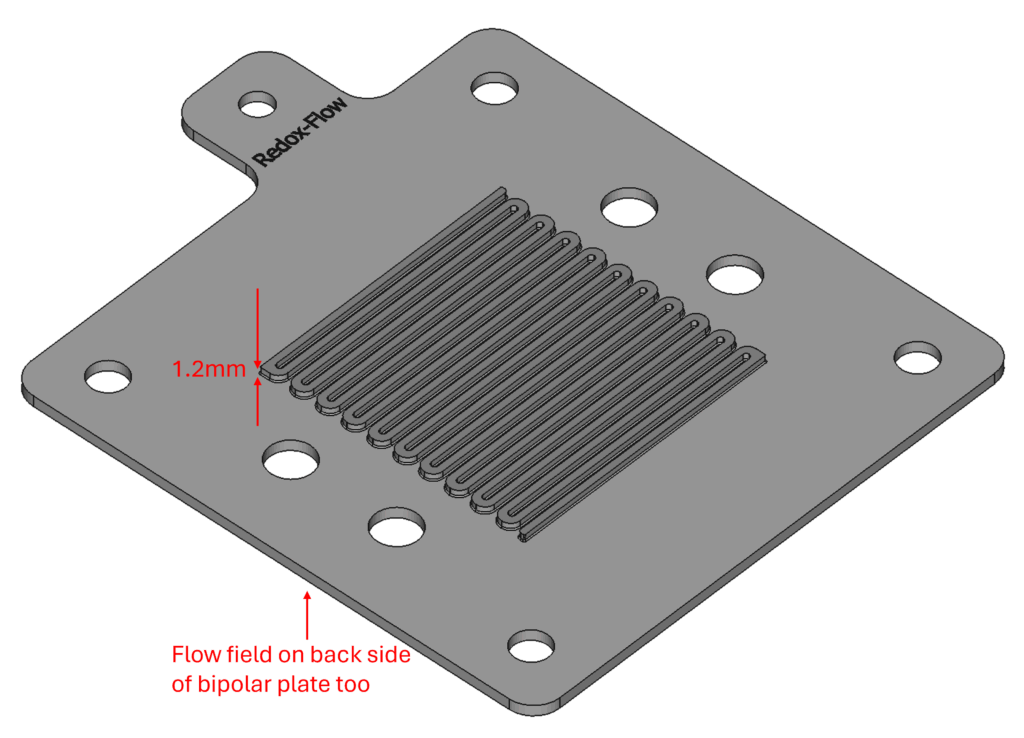
The stack can be configured with up to 9 cells. Each cell is build up around a membrane or separator (not included), with an electrode on each side and a bipolar plate. The electrodes (5×5 cm, not included) are placed within a set of gaskets, consisting of cover gaskets and central flow-field gaskets, specifically designed for the X-Stack-FF for best performance. Hence for each cell, 4 cover gaskets and 2 flow-field gaskets are needed. The combined thickness of the cover gaskets and flow-field gasket on each side, should match the desired compressed thickness of the electrodes.

The X-stack FF can be used for different electrolyser technologies. Redox-flow.com has tested the stack as an alkaline water electrolyser with the following configuration
1 EPDM Flow field gasket with 1 mm thickness and 2 PTFE Cover gasket with 0.25 mm thickness were used in each half-cell. As Nickel felt electrodes are almost incompressible it is important to combine gaskets that match the electrode thickness. To seal the porous Zirfon separators 0.5 mm PTFE porous separator gaskets were used (to prevent leaking through the separator to the outside of the stack)
Due to the porous nature of the Zirfon separator two separate electrolyte containers cannot be used as even very small pressure differences between the two sides will result in liquid cross-over through the membrane. For this reason, only one common electrolyte container is used.
The hydraulic circuit consisted of ¼’’ PTFE tubes, one bottle and one heating unit placed right after the pump and just before the stack inlet.
First graph below shows initial pressure loss test in the stack with pure water at RT. It was measured using Redox-flow pressure unit, right before stack hydraulic inlet and outlet.
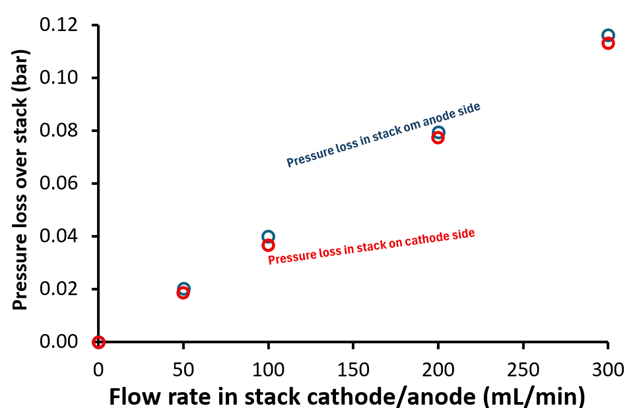
As seen the pressure loss is very small, in particular this is due to the small thickness of the electrode and the interdigitated flow fields on the bipolar plates. In this case the total pressure loss inside the stack, consists of small contributions from the flow channels in the PEEK flow body, stack manifold, shunt channels before the electrodes and the electrodes by them selves,
Although the hydraulic tests were performed with water, the pressure loss should not be significantly different for other electrolytes (and temperatures).
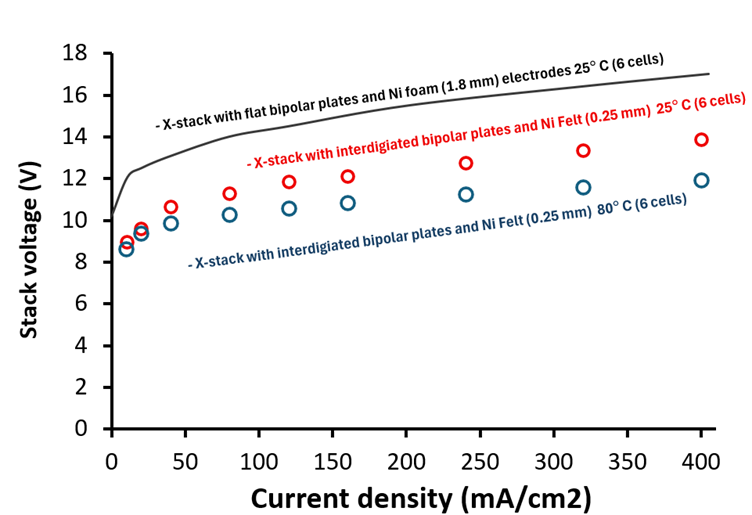
For performance test polarisation curves at both 25° C and 80° C were performed with electrical currents up to 10 A (400 mA/cm2) and 200 mL/min flow rate (33 mL/min per cell). They were recorded by applying constant current for 30 s, and then immediately shifted to the next current. The voltage for the polarisation curve was obtained by averaging the data points of the last 5 s of the constant current measurement. The stack and electrolyte were used ‘as is’ i.e. without preconditioning/pre-electrolysis of the stack.
Graph below shows the results of the test.
As seen from the polarisation curves the performance is significantly better (as expected) for the 80° C experiment compared to the 25° C (i.e. the voltage is almost 2 V lower at 400 mA/cm2). For comparison the X-stack Flat (with 1.8 mm Nickel foam electrode) polarisation curve measured at RT is also included. Interestingly the performance of the Nickel felt is better than that of the foam. In any case these test have not been performed for optimisation, but to test basic functionality of the stack. The 400 mA/cm2 corresponds to 10 A, whereby the total electrical power supplied to the stack is more than 100 W. In present case current was limited by power supply, but higher electrical currents can be supplied to the stack.
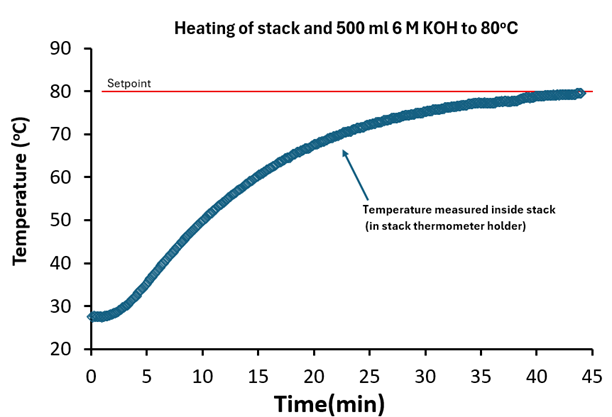
The heating of the stack was done with Redox-Flow.com heating unit. The temperature of the stack was measured with a thermometer in the thermometer holder inside the stack. The temperature profile when the stack and electrolyte is heated from 25 C to 80 C is shown in the graph below.
It is seen that the stack and 500 mL electrolyte reaches the 80° C setpoint within less than 45 min and underlines the efficiency of the heating unit.
CDI Flow Cells, CO2 Electrolysis Cells, ...
From: 1,955.00 €
CDI Flow Cells, CO2 Electrolysis Cells, ...
From: 1,395.00 €
CDI accessories, CO2 Electrolysis Accessories, ...
2,395.00 €
CDI accessories, CO2 Electrolysis Accessories, ...
2,195.00 € From: 5,545.00 €
CDI Flow Cells, CO2 Electrolysis Accessories, ...
795.00 € This product has multiple variants. The options may be chosen on the product page From: 7,106.00 €
 From: 7,849.90 €

CDI Flow Cells, CO2 Electrolysis Cells, ...
From: 3,320.00 € From: 3,320.00 €
CDI accessories, Electrolysis Accessories, ...
485.00 €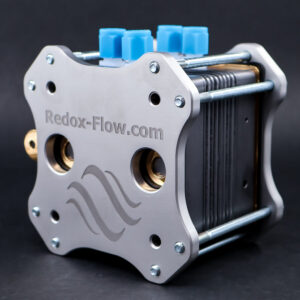 From: 3,410.00 €
 From: 3,395.00 €
CDI Flow Cells, CO2 Electrolysis Cells, ...
From: 2,826.00 €