Applications
- Gas humidification, including feed-gas conditioning for CO₂ electrolysis.
- CO₂ removal from air or other gas streams using a compatible alkaline scrubber/absorbent, for example in alkaline metal–air batteries and flow battery systems.
- General gas scrubbing using a suitable absorption liquid.
- Gas-volume measurement by water displacement, supporting Faradaic efficiency measurements in water electrolysis and other gas-evolving electrochemical processes.
Design and connections
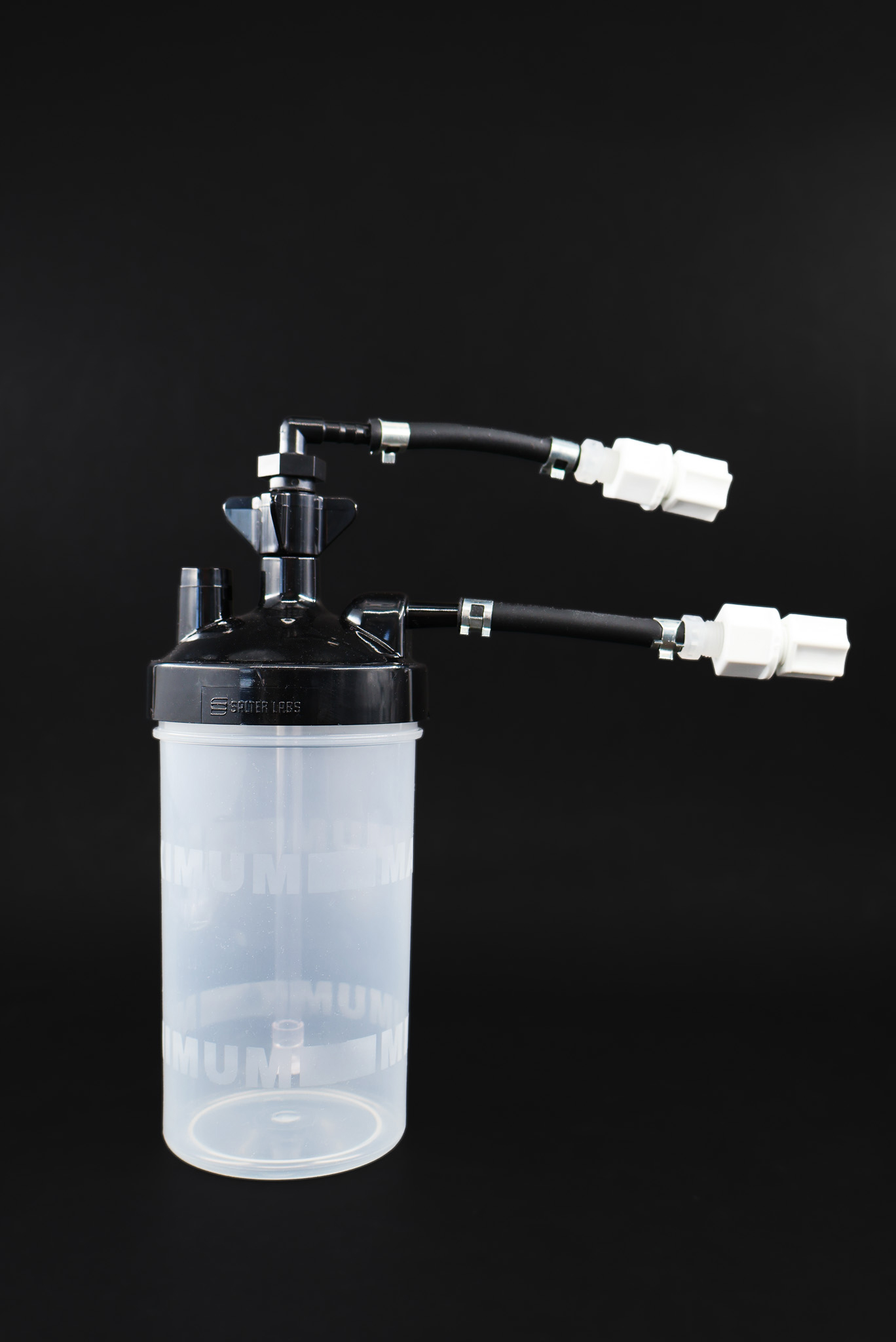
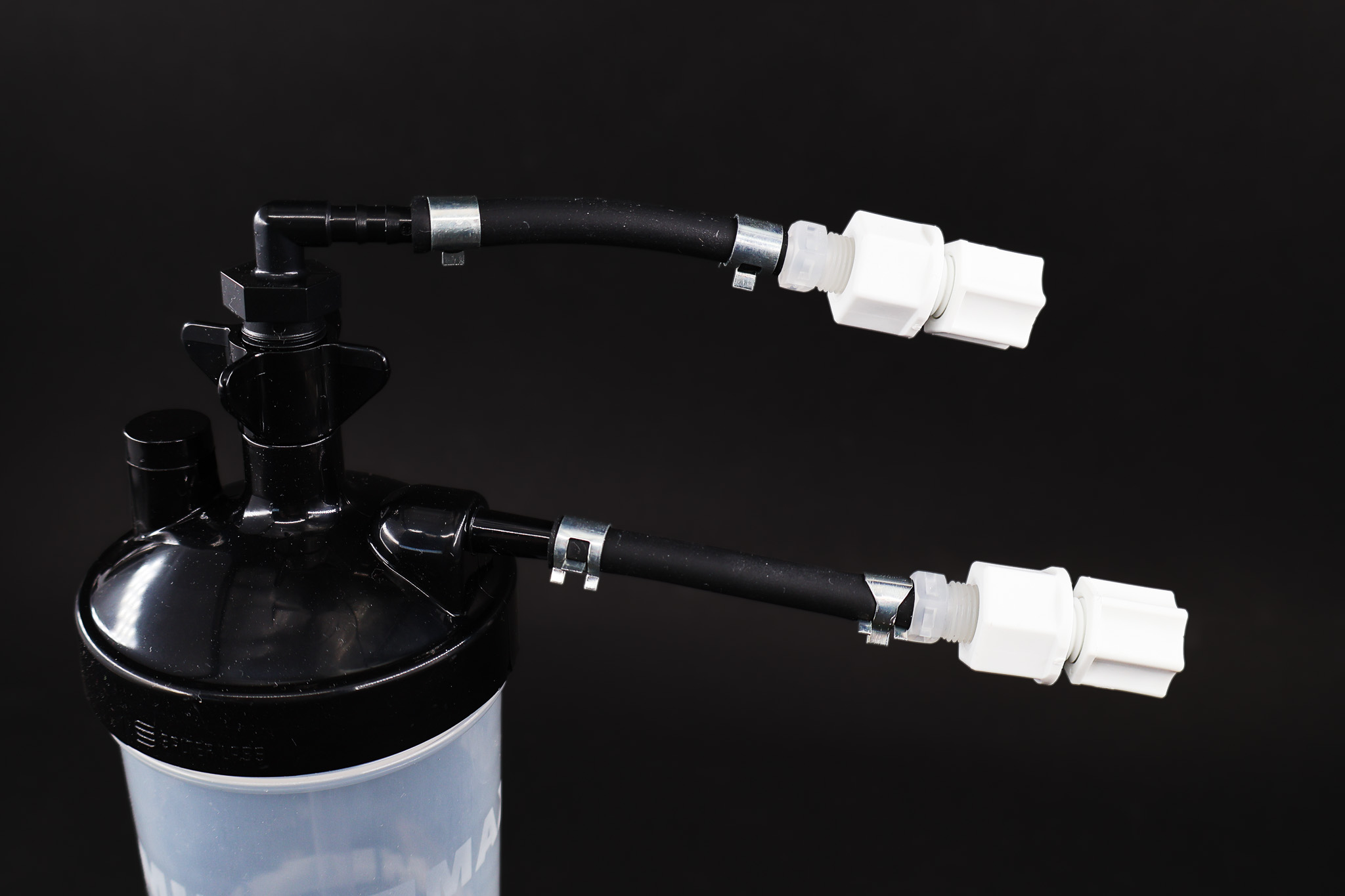
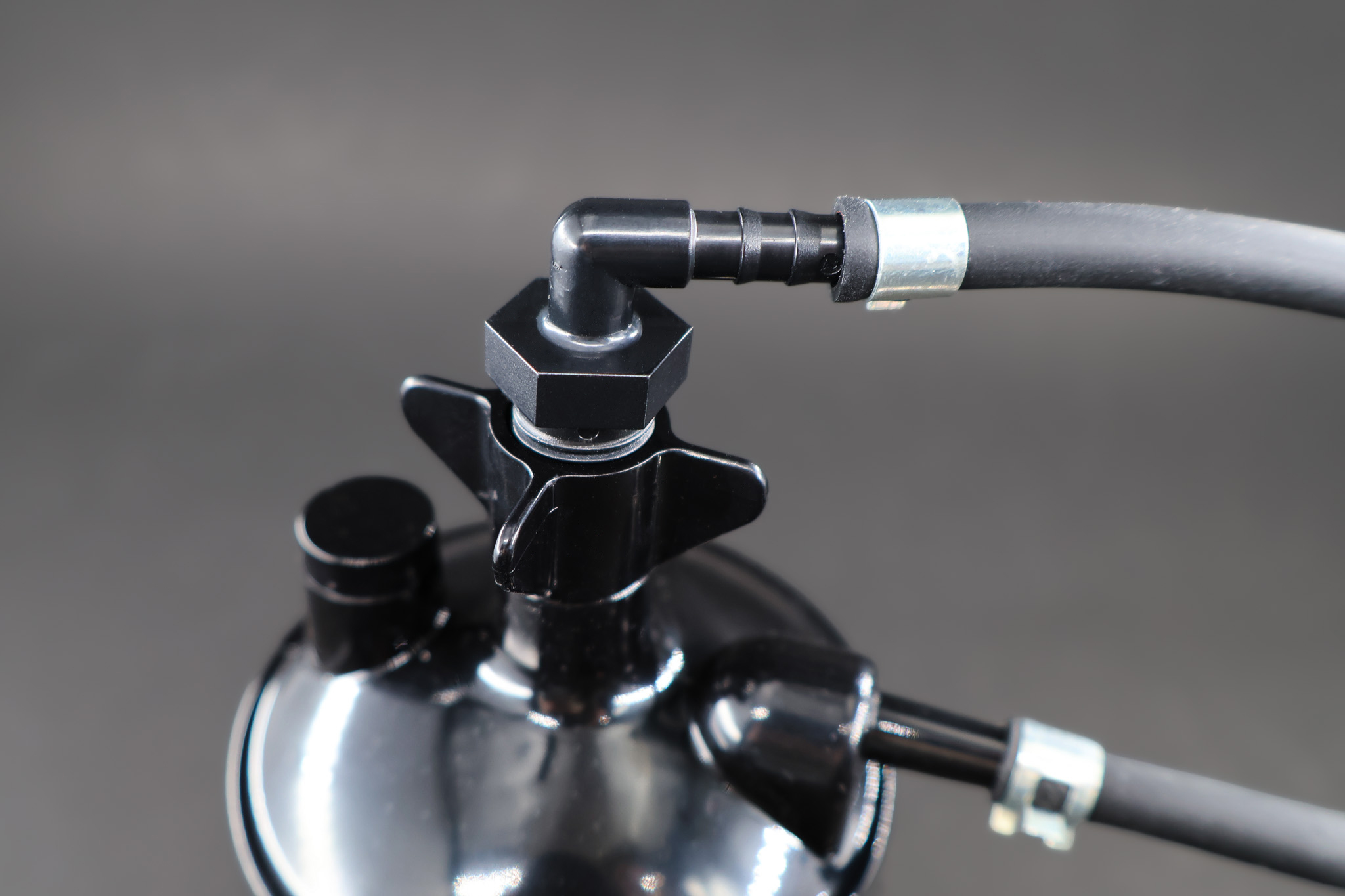
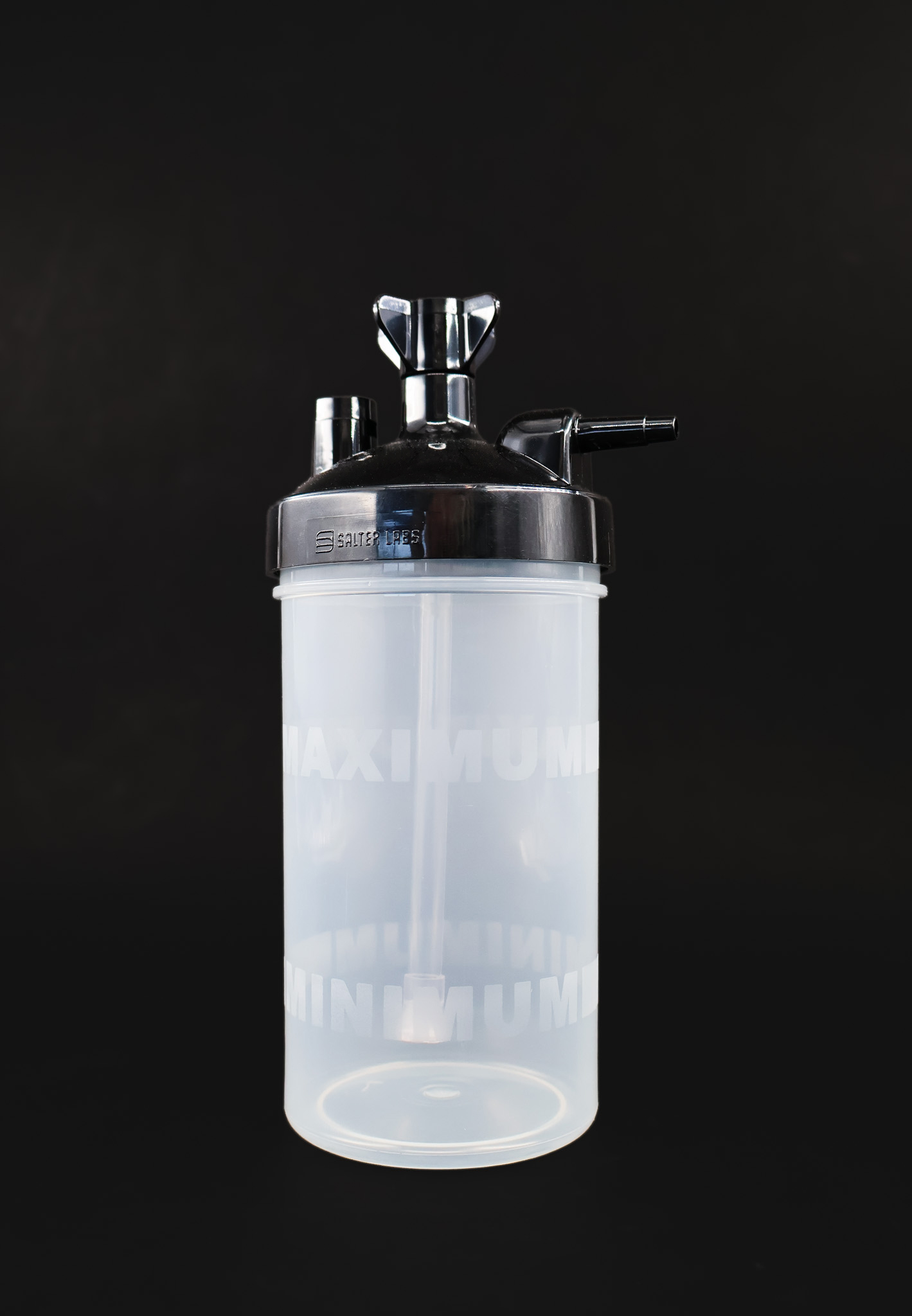
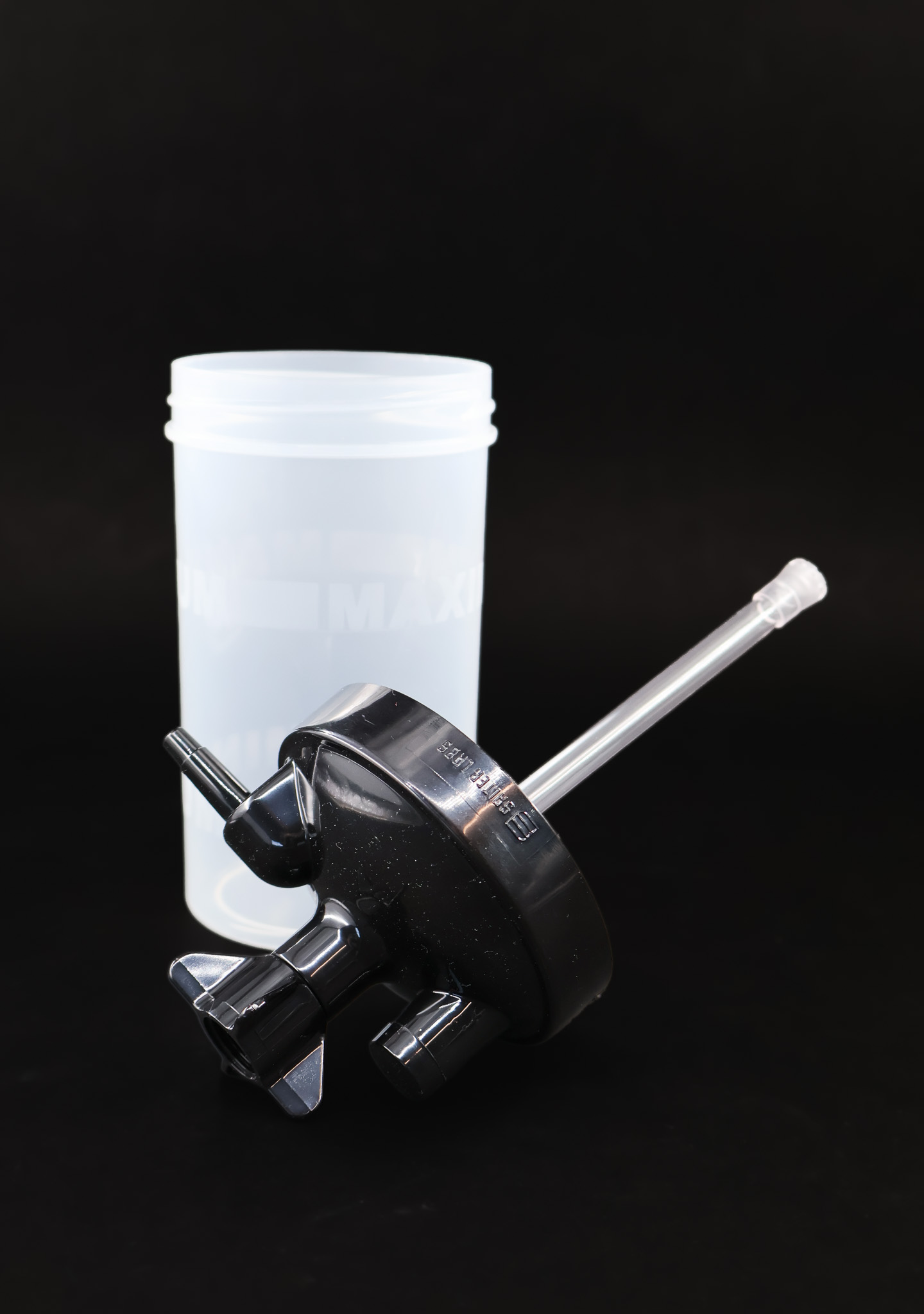
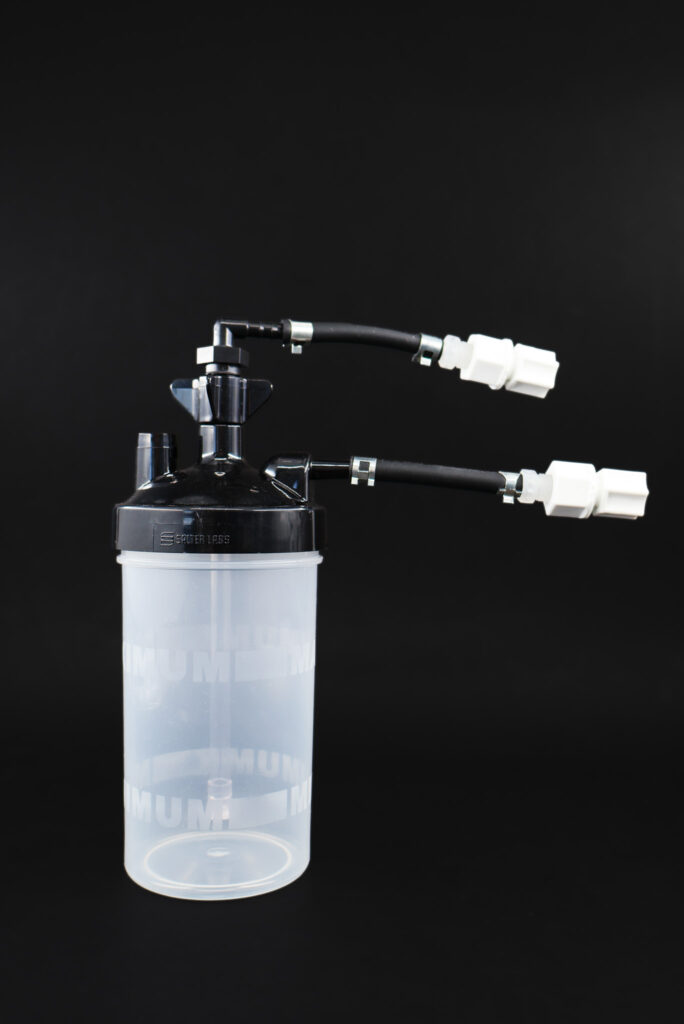
The bottle has two connections: a central connection linked to an internal dip tube and diffuser, and a second connection opening into the headspace beneath the lid. Their functions depend on the application.
The screw-on lid can be removed for filling and cleaning. An integrated pressure-relief valve has a nominal opening pressure of approximately 0.4 bar above atmospheric pressure. This opening pressure should not be interpreted as the maximum allowable continuous operating pressure.
Adapters are included for ¼″ and ⅛″ outside-diameter tubing, such as PTFE tubing. Please contact us for other tubing sizes.
Materials and chemical compatibility
|
Component
|
Material
|
|
Bottle
|
Polypropylene (PP)
|
|
Lid and inlet nut
|
ABS
|
|
Internal dip tube and diffuser
|
PVC
|
|
Pressure-relief valve weight
|
Brass
|
Chemical compatibility depends on the chemical, concentration, temperature and exposure time. Compatibility must be checked for all components exposed to liquid, gas, vapour or aerosol.
The brass component is normally outside the liquid volume but may still be exposed to the gas stream and vapours. Concentrated acids, fuming liquids, aggressive solvents and other chemicals that can attack the constituent materials should not be used without specific compatibility validation.
Gas humidification and scrubbing
For humidification or scrubbing, introduce the gas through the central connection. The internal dip tube and diffuser distribute the gas through the liquid, and the treated gas leaves through the headspace connection.
Humidification: Fill the bottle with deionised water. The resulting humidity depends on gas flow, water temperature, liquid level and gas–liquid contact.
CO₂ scrubbing: Fill the bottle with a compatible alkaline absorption solution. CO₂ removal depends on the absorbent composition, remaining capacity and gas flow. Replace the solution as it becomes depleted. The gas is also humidified during scrubbing.
Other gases may be removed using a suitable absorption liquid, provided that the liquid and resulting reaction products are compatible with the bottle assembly.
Gas-volume measurement by water displacement
With the bottle standing upright, introduce the gas to be measured through the headspace connection. Connect the central dip-tube connection to a separate collection vessel.
As gas accumulates above the water, it displaces water through the dip tube into the collection vessel. The displaced water can be weighed after the experiment or recorded continuously using a balance with data logging. Water volume is calculated from the measured mass and water density at the measurement temperature.
For a gas of known composition, the collected amount can be compared with the electrical charge passed to determine Faradaic efficiency. For mixed gas streams, such as those commonly encountered in CO₂ electrolysis, additional composition measurements are required to determine product-specific Faradaic efficiencies.
Measurement considerations
For reliable results:
- Ensure that the complete gas and liquid circuit is 100% leak-tight.
- To make accurate measurements, the atmospheric pressure and room temperature must be measured (to calculate the molar gas volumes accurately – virial contributions to the ideal gas equation can/must also be included)
- Correct for water vapour when converting the measured volume to the amount of dry gas.
- Account for gas dissolution in the water, particularly for readily soluble gases such as CO₂.
- Allow for initial gas displacement, changes in system gas inventory and stabilisation after changes in operating conditions.
- Use a suitable balance and account for water density, evaporation and any liquid retained in the transfer tubing.
- Synchronise gas collection with the electrical charge measurement.
- Complete the measurement before the usable displacement volume is exhausted.
Achievable accuracy depends on the complete experimental setup and should be established by calibration and validation under the intended operating conditions.




 520.00 €
 310.00 €